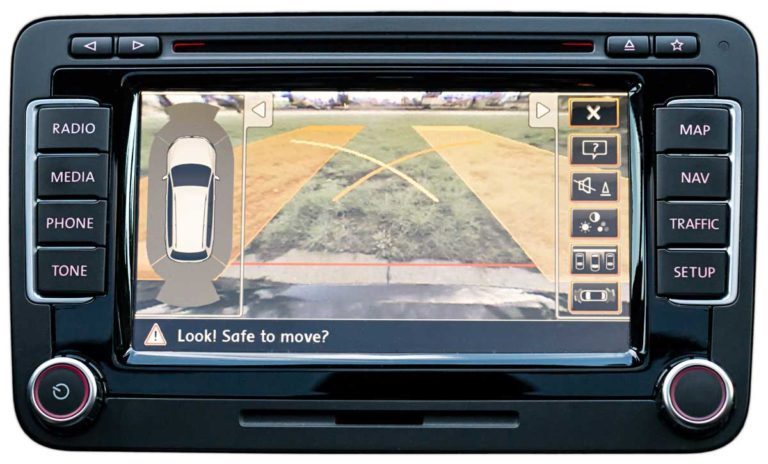
Serving the Winston Salem / Triad area. The Stereo Shop is your one stop for state-of-the-art professionalism in Home Theater and Car Audio and Video.


Winston Salem / Triad Area Home Theater

StatisticsThe Stereo Shop Customer Reviews


Looking for a home theater design, set up, and or installation in the Winston Salem / Triad area? Then you have come to the right place! The Stereo Shop is your one-stop shop for everything you need to turn your den, family room or basement into a state-of-the-art movie theater, right in your own home. A home theater is more than just a screen and a projector. We offer the finest in LCD TV, projectors, screens, and the thing that most people don't think of when they search for Home Theater designs: seating. We offer seating, projection and display products and equipment that can satisfy any demand and can fit any budget.


Not to mention that with over 55 years combined experience we can handle any Home Theater project you can throw at us with accurate and efficient professionalism. We are the Home Theater Pros for Winston Salem / Triad Area.


Maybe you're not looking for a full scale home theater set up, maybe you just want to upgrade to an HD flat screen TV and don't want to endure the hassle of setting it up and mounting it on your wall yourself. Not a problem, no job is too big or small, and we have the experience and expertise to have your TV, your stereo system and anything else electronic all running in harmony and professionally installed in less time and for less money than you might think.


The bottom line is, no matter how big (or small) you want your new home theater design to be, you owe it to yourself to give us a call today.


Winston Salem / Triad Area:  Car Stereo Audio-Video


If you have your heart set on a truly awesome car stereo system, with all the bells and whistles and even more, again, The Stereo Shop is the only place in the Winston Salem Greensboro market you need to stop at. Not only do we carry the brand names you are looking for like Kicker, Alpine, etc. but we also have the skills and creativity to make each project special, unique, and ultimately world-class.


Want TVs in your headrests? No problem. Want a radar detector built in to the dash that is impossible to detect? No problem. Remote start? We got it. Custom installation for your car's navigation system? We can handle it all.


Take a look at some of our work. We are not just 'stereo guys' we are true audio-video experts and auto enthusiasts. Combine the two and you get The Stereo Shop:  Winston Salem / Traid Area one stop-shop for everything electronic.


For over 15 years, The Stereo Shop has been delivering the highest quality home and car audio, video,  and car security solutions available anywhere. Our professionals have award winning skills and unparalleled creativity. This allows us to present custom home theater and car audio designs like those which you may have only dared to dream of. 


Our step by step process insures your total satisfaction, regardless of how big or small your project is.


  • CAE Musicmix
    These guys are the kings of junk rock. That's what I like to call it anyway. It's a compliment. I don't know what made me think of Ween now. Sometimes it's probably better not to think of Ween. But I did and I thought of this song. Actually I was thinking of another Ween song, their tribute to Prince—or maybe it's their parody of the royal one's music. If you want a real tribute song though, watch and listen to the vid after "Push th' Little Daisies". For all you Van Halen fans.


    If you like song off the CD, then you'll enjoy this live version. If not (or if you don't know Modest Mouse), well, you'll really hate this, I would imagine. But if you're willing to give them a try then check the following video. I threw in "Willful Suspension of Disbelief" for the heck of it. Why not.


    Dinosaur Jr. on some British show playing "Start Choppin'". I'm sorry, but there's something odd about this. Especially with the ridiculous quasi psychedelic background effects. J. Mascis saves it, however, with one of his patented "junky" guitar solos.


    Does anyone remember these guys, the Meat Puppets? I barely did. Seriously though, some of the better alternative rock from the time. There was always a hill-billy quality, for lack of a better term, to their music. And yet it still somehow worked. ;) In large part because of Curt Kirkwood's guitar playing and those hooky riffs!


  • Focal Utopia Be
    Focal tied for second in our recent Speaker Poll. Products like the Utopia Be are in part responsible for the company's popularity among sound quality enthusiasts in car audio. We are running our reviews of various speakers by manufacturers from our poll so you can read for yourself what makes these products worth the money. Here we have Pat Turnmire and Eric Holdaway for the objective and subjective analysis. In the case of these Focals, it's not only the high-end materials and the product engineering, but also the cosmetics that justify the price. We don't mind paying a little extra for something that looks as good as it sounds. Looks like we'll have to run a Top 10 list of best cosmetic speaker set, like we did for amplifiers. —Ben Oh

    I get to test (and play with) pretty much every high-end woofer and component set available in car audio. I guess this gives me a unique perspective, but mostly it leaves me bored with much of what I see. When the huge box arrived totaling some 35 pounds, supposedly containing a new component set from Focal, the last thing I was, was bored. When I opened the box I saw the strikingly beautiful brushed aluminum flight case that enclosed the system. Upon opening it, I started looking at the components themselves and the crossover.I was even less bored. In fact, I felt that very rare feeling of excitement over something new and very cool.

    Focal Utopia Be No. 6


    I guess that someone crazy at Focal said, "What if we build the very best component parts and put them with a completely variable crossover? Oh yeah, and cost is no object." That has to be what happened, because that is what arrived.

    With the Utopia Be line, Focal has put together a really flexible range of component parts that can be mixed and matched with their crossovers to fit pretty much any high-end car audio situation. (You are not going to find these on the www.focal-america.com site. You need to go to www.focal.tm.fr to check it out.) They are sold as systems No. 5, No. 6 and No. 7, which are basically a 5. 2-way, a 6-1/2" 2-way and a 6-1/2" 3-way with a 3" mid. (All use the same tweeter.)

    The set that showed up on my doorstep was the No. 6, which will probably be the most popular. It is comprised of a 25mm Beryllium Tweeter (Be is the atomic symbol for beryllium), a 6 1/2. neo magnet midbass and the (gasp) extremely versatile Crossblock crossover. These components are also the heart of the JMLab, ultra-high-end home audio products that cost up to $80,000 for the flagship "Grand Utopia Be".

    The tweeter is pretty much perfect. Beryllium is the ideal diaphragm material. It is 0.5 times less dense than titanium and 1.5 times less dense than aluminum, but is 3 and 5 times stiffer, respectively. For domes of identical mass, beryllium is 7 times more rigid than one made of titanium or aluminum, and the velocity of sound waves traveling through it is 3 and 2.5 times faster than through, respectively, titanium or aluminum. It.s also rare, expensive, hard to form into a dome shape and produces highly toxic fumes when it is machined or abraded. There are serious disclaimers in the instruction manuals about what to do if you damage a tweeter. (This brings up the very real possibility of a serious problem if you car is ever involved in an accident.)

    The diaphragm is inverted unlike most tweeters and is coupled to the frame with a wide flat edge. This combination gives a very extended top end with little or no diffraction artifacts that exist in virtually every other tweeter. You will see the graphs later in the article that go out to 40kHz. This is pretty much the limit of my test system. It appears that at least on-axis it goes much higher than this with no breakup modes.

    The woofer is equally advanced with a "W" cone that is described on their website as follows:

    "The "W" cone uses two very fine tissues of woven glass that are lighter and thinner than aramid fibers. In addition, the molecular bond between the foam and the glass tissue is far superior to that of the aramid fibers. This results in a cone structure which is mechanically more stable and with superior stiffness. This construction allows us to further optimize the transmission speed of the sound wave in the cone. This new construction process allows the amount of internal damping in the structure to be very accurately controlled by varying the thickness of the foam: the thicker the foam, the higher the damping factor. The relationship between the thickness of the glass tissues and the foam core allows us to finely optimize the cone structure depending on the particular application and the frequency area to reproduce. The .W. cone produces an extremely transparent and neutral sound free from coloration and distortions normally associated with loudspeakers. Its only limitation, the price; more than 10 times the price of a quality paper cone."

    Did you catch that last line, the one about price? I haven't seen the prices on these yet but my guess is, if you have to ask—well, you know the rest.

    Finally we come to the crossover. I have tested crossovers with lots of flexibility. I have tested crossovers with really high-grade parts. I have never tested, seen or imagined a crossover that is this flexible or uses this many absolutely highest-grade available parts. Here again from their website:

    "It (the Crossblock) is a fantastic tool, which helps to precisely adapt the crossover to the acoustical characteristics of the car in order to integrate its acoustics into the whole sound system ... Instead of using more than 10 coils we designed a single Multicoil air core inductor which is in essence, thanks to multiple connection points within the winding, 10 coils wound at once into one. This allowed us to use a very large gauge copper wire, which guarantees a very low insertion loss. The same way, instead of using a multitude of capacitors, we designed a Multicap capacitor, which is nothing else but a number of different-value capacitors wound together as one. These Multicaps are indeed high-efficiency metallized polypropylene capacitors made with the strictest specifications by SCR. We also use high-quality switches with very low insertion loss, and we even went as far as wiring in parallel some of the terminals of the switch."

    In short, they built a crossover (that's as big as some amps), that uses the absolute best parts, has 4,480 possible settings and can adjust the frequency response to perfectly match your car. Of course, as you will see later, adjusting the crossover is not for an amateur or even a moderate level car audio shop. These should really only be installed by a shop with test equipment like multi-microphone RTAs, which can make the most of the product. How much does this cost? Again, if you have to ask.

    On to the testing.

    Parameter Testing

    [My testing setup has changed dramatically with the addition of the Klippel Distortion Analyzer. I still use the ACO Pacific 1/4. microphone" lab amplifier and IEC baffle; however, all of the testing is done through the Klippel now. It is the "be all, end all" analysis tool for the loudspeaker engineer. The Klippel is revolutionizing loudspeaker design in virtually every application. Check it out at www.klippel.de.

    Klippel testing has given us a new way to look at a speaker's linearity under power. The non linear Motor Force (BL[x]) and Compliance (Cms[x]) are graphical representations of what the speaker is doing while it is playing. They tell us if everything is balanced and working together.

    Both of these curves should be centered on the X(mm) 0 line and have essentially the same shape on either side of this point. The dashed lines on the graphs are the mirrors of the actual test and make it easy to see if the curves match the ideal.]

    My testing starts with "Small Signal Parameters" for the woofer.

    If you have been following the reviews for the last few years, you know that I actually measure "Small Signal" at a more realistic level than traditional tests. Small signal for the Klippel system can be measured as the highest voltage before the speaker starts to become nonlinear. For the "Utopia Be 6 W2" woofer this was at 2 watts, which is a pretty good starting point considering the very high efficiency of the speaker. The key parameters are listed in the Small Signal chart.

    Parameter Small signal 2 Watts
    Re (Ohms) 2.91
    Qms 4.21
    Qes 0.62
    Qts 0.54
    Fs (Hz.) 42.6
    Vas (l) 21.05
    Cms (mm/N) 0.85
    Efficiency at 2.83 volts (dB) 91.5

    So how do these stack up? Good, straight down the line. These speakers are going to be used with a subwoofer so the relatively low Q / Low Fo is not an issue. The stand-out parameter is the efficiency. The high-tech cone certainly shows.

    [Note: unfortunately we could not find the first set of graphs mentioned below. We'll restore those as we find them. —Ed.]

    The Bl(x) (Graph 1) curve for the woofer isn.t perfect, with a shift of about 1.5mm. The question is why is it biased on such a high-end speaker and, more importantly, will it affect the performance? The Cms(x) (Graph 2) curve shows the same bias, in the same direction. This typically means the suspension is forcing the coil out of position. I checked the speaker visually and there is a slight dip in the spider, which is probably the culprit. The good news is that although the curve doesn.t look perfect, the resulting distortion will probably not be audible, especially when used with a subwoofer and active crossover.

    The Bl(x) and Cms(x) curves can also be used to predict the maximum excursion for the speaker (Xmax). It is defined by Klippel as the point at which the compliance or Bl nonlinearities create 10% harmonic or intermodulation distortion. This happens when the Bl has dropped to 82% of its x=0 value (XBl) or Cms has dropped to 75% (Xc). For the Focal woofer the XBl point is 3.7 mm and the Xc point is 4.4mm. My guess is that if the suspension bias was corrected these numbers would be closer to the 4.5mm listed in the specifications. Again, with an active crossover and subwoofer, these are still good numbers, especially if the frequency response is stellar.

    Frequency Response

    This is where the story starts to get really interesting. I started by measuring the speakers without crossover to see what the exotic materials were bringing to the table. Graph 3 shows the woofer and tweeter response on-axis—killer high-end on the tweeter and a really nice controlled top end on the woofers. It's interesting that the woofer does not have a dust cap—part of the motor extends through the center of the cone. With a less stiff and damped cone material, the high frequency roll-off would look terrible. This woofer.s response is about as good as it gets. Graph 4 shows the woofer's on-axis and 30-degree off-axis responses together. The roll-off is still smooth and well damped.

    The tweeter on- and off-axis response in Graph 5 shows a marked roll-off starting at 10kHz, but this is to be expected from any dome tweeter.inverted or not.

    Now that I had a good idea of what the speakers could do, it was time to see what the crossover was about. I ran through the range of settings on the front panel. They include a woofer lowpass switch (changes the woofer x-over frequency) with 10 settings, a Q switch (changes the shape of the response) with eight settings, a highpass switch (changes the tweeter x-over frequency), with seven settings, and a tweeter level switch with eight settings.

    Woofer on axis, xover


    Graph 6 above shows the range of lowpass settings on just the woofers and Graph 7 shows the system response with all of the other switches set to 1. Note that the first five settings change the shape of the high-frequency roll-off and the last five settings change the roll-off and the woofer level. The system responses are terrible because the tweeter settings have not been optimized, but you can clearly see the wide range of responses available (Graph 8).

    On Axis System Low Pass Range


    Woofer on axis, low pass 8


    Graph 8 above shows the far more subtle range of Q settings on the woofers response. In the system response (Graph 9) you can see that these settings affect both the roll-off shape and the interaction with the tweeter at the crossover point (the notch at 2,600Hz).

    On Axis System, Lp10


    Graph 10 shows range of tweeter highpass settings on the tweeter by itself. The top line in pink is the response of the tweeter without crossover. It is clear that the crossover has an insertion loss of about 3dB. This should not be a problem however because of the tweeter's very high sensitivity.

    Tweeter on Axis, no xover


    The system response is shown in Graph 11 below with the woofer lowpass set to 10 (lowest frequency) and Q to 8 (smoothest response). This wide range of variations illustrates how complex tuning a system would be with all of the available setting options.

    System on Axis, LP10


    Graph 12 illustrates the precise 1dB steps of attenuation over an 8dB range that will let you fine tune the tweeter exactly to the wide range of mounting placements in car systems.

    Tweeter on Axis, attenuation


    The results of about 30 minutes of tweaking the settings are shown in Graph 13 below. The red line in the center is the best that I could get for an on-axis response. The lines above and below show the results of the two closest highpass settings. This is a very respectable response - +/- 3dB. From 200Hz to 20kHz.

    System on Axis best settings


    Graph 14 below took about five minutes of tweaking and shows the 30-degree off-axis response. If you ignore the range above 10kHz the response is +/- 1.5dB! This is phenomenal and represents what you can expect in your car. It.s important to note that the tweeter.s response at 20 degrees is almost perfectly flat to 20kHz, so in most systems this response error will not exist.

    Off axis 30 Best Response


    I was a little concerned about the wide range of crossover frequencies on the tweeter so I decided to really push it at the lowest point to see how much distortion it produced. Graph 15 shows the results of a 100-watt sweep from 1kHz to 40kHz. The harmonic distortion in the range below 10kHz never gets much above 3% and even at the 20kHz is only 5%. To put this in perspective, you ear will be creating more distortion at this listening level and you will be risking long term hearing loss after only a minute or two. This is by far the best distortion results that I have seen from any dome tweeter!

    Tweeter Harmonic Distortion


    RESULTS

    On-Axis Response: 10
    Off-Axis Vertical: 10
    Off-Axis Horizontal Mount: 10
    Flexibility: 10
    XBl: 8
    XC: 8
    Distortion: 10
    Parameters: 10

    So what is my final opinion based on the tests? If the woofer didn't have the small misalignment, the speakers would have scored an almost perfect score. The on-axis response wasn.t as smooth as the off-axis, but it was still better than any other component system I have tested. This is without reservation the best component set I have tested, seen or heard about. So Eric, how do they sound? —Pat Turnmire

    Subjective

    Focal has been producing speakers for a long time now. They have always had a very good reputation in the market as a builder of high-quality and great-sounding loudspeakers. When I first saw these beautiful Focal Utopia Beryllium speakers, I thought the packaging is fantastic. The Utopia Be No. 6's come in an oversized briefcase, with aluminized sides and frame. I immediately called Orca Designs, the importer for the Focal brand. I was in luck too, because I got the big cheese himself, Kimon Bellas, president of Orca Designs, on the phone. He answered a few questions and gave his personal tips for getting the maximum performance out of these beautiful speakers.

    Bellas told me that the No. 6's were designed for the customer who wants a high-end home audio system sound in their car. Of course, one would have to afford the $3,900.00 retail price. Bellas told me that Focal, through their JM Labs brand name, actually makes an ultra high-end set of home audio speakers called the Utopia Be No. 6 that uses the same inverted-dome beryllium design as the car audio versions.

    I have used other beryllium diaphragm drivers in the past, such as the Technical Audio Devices 2001 1. compression drivers which have always been extremely impressive in their high-frequency detail and low distortion. I asked Bellas why beryllium is such a big deal in speaker design? He replied that the material has all the qualities that you would want in a diaphragm material. It is extremely stiff, very light and exhibits superior internal damping. Of course, nothing is for free in the world of speaker manufacturing, which is true with beryllium. It is very expensive and extremely hard to successfully form, because it is brittle and delicate.

    While the 6 W2 Be, 6-1/2" woofer does not have the difficulty of being made from beryllium, Focal has done a great job of creating a woofer that should actually fit most cars! The 6 W2 Be is only 2.84. deep. This is achieved mostly by the use of a high-power Neo magnet structure, driving the composite multi-layer cone. It.s nice to see a manufacture keep this important point in mind!

    The "Crossblock" (crossover) is fascinating. With no less than four knobs, each with several detents, getting the crossover setting dialed in was the most time consuming part of this test. Even after putting in all the effort that I did, I am not 100% sure that I got the most out of them.

    So, where did I end up on the Crossblock for the adjustments? Well, I'm glad you asked! The first knob on the left is called S1 and it has 10 lowpass frequency selections available. Position 1 has the highest frequency passing and really gave the woofer too much signal, while position 10 was nice and smooth, but seemed to leave an under-lap in the response curve. It will be great to see the data that Pat comes up with once he has measured this device. I ended up with the adjustment right in the middle at the #5 position.

    The next knob, labeled S2, also affects the shape of the lowpass filter by changing its .Q.. It has eight adjustment detents. Position 1 has the most energy at the crossover frequency and position 8 has the flattest electrical response. I tended to like the flatter electrical responses, so the final position that I did the testing on was 5.

    The S3 knob has seven levels of adjustment for the highpass frequency to the tweeter. In position 1, I found the highs to be dull and missing any sense of air, while at position 7, the tweeters are too bright. I liked position 4 and position 5 depending on the music selected.

    Finally the S4 knob, adjusts the loudness level for the tweeter. Position 1 has the highest level of output and position 8 has the most attenuation. I found that position 5 was where the N°6 provided me with the smoothest response.

    Listening

    After giving the Utopia Be No. 6's a break of over 20 hours, I sat down and inserted Diana Krall's Love Scenes album. The big upright string bass plucks came through with surprising tactile output. I could feel them in the seat of my pants. The overall detail was good on the note changes and frequency shifts. I could also hear the fret and string noises easily.

    The vocal quality was a touch "bitey" on attacks, but the vocal imaging was fixed and centered; however, the height seemed low. The piano was a little light in body, which surprised me because the string bass was so full. As with the imaging the sound stage was fixed in size and position, but the room size was unrealistic.

    The No. 6's sounded very nice, but I was a bit disappointed so I decided to try an old trick. I flipped the polarity of the tweeter and gave that a try. Instantly the vocals were better, much smoother. Image height was improved, a sense of ambience became apparent, and the piano thickened. Much better overall for sure.

    Picking up with Tracy Chapman's Heaven's Here on Earth, I found that the big bass drums impacts were light and that the fundamental frequencies were well attenuated, which would be expected on a 6-1/2" woofer. The acoustic guitar was clear and nicely detailed. The tambourine bangles had good individuality and moderate shimmer, but I would have liked to have heard even more shimmer.

    The woodblock in the rhythm section was recessed sounding but "woody" in tonality. The vocal reproduction is sharply focused with good breath detail and very nice realism.

    Moving to a full acoustic recording I selected Telarc's 20-bit recording of Schubert's Symphony #9, "The Great," to test for a sense of space and tonality. The French horns were very accurate but sounded distant. They did not come through as intimate as on the Alpine F#1's, but the overall ambience of the No. 6's was more pronounced. The violins were full, quite beautiful sounding. They were the best part of this playback! The string bass was tight and plucky with the oboe's coming through silky and reedy.

    I changed gears with a move to some male vocal tracks. First up was Garth Brook's Thunder Road. The thunderclaps were large and distant sounding. They did not put me outside, but definitely gave me a sense of being in a large area. The guitar was crisp and very well detailed. Brook's vocals sounded really nice. He was closely mic'd and there was no problem with the transients or his level, from soft to loud. The cymbals and drum kit were fixed and again well detailed.

    Finally, finishing off with some good ole rock and roll, I popped in ZZ Top's La Grange. The opening rim taps were crisp and the electric guitar was well shaped. The vocals were fantastic with solid imaging stability. The toms in the drum kit were thin sounding but taut. I would have liked more midbass and bass punch, so adding a subwoofer would be a good idea.

    Conclusion

    What can I say; Focal has done it again with the Focal Utopia Be No. 6, 2-way speaker system. Space age technology and materials, everything combined to create a top-of-the-line speaker system. If you can afford these, they are worth a listen. The Crossblock, while being very easy to use, can be a bit overwhelming to get set up to its full potential, so you want to find a dealer who hears what you hear and is willing to spend some time setting up your system. —Eric Holdaway

    Subjective Score Chart
    Utopia Be No. 6

    Overall Sound Quality 15 (of 20)
    Tonal Balance (above 80Hz) 7 (of 10)
    Low-Frequency Extension 7 (of 10)
    Clarity at Low Volume 8 (of 10)
    Clarity at High Volume 8 (of 10)
    Image Stability 8 (of10)
    Listening Fatigue (moderate volume) 7 (of 10)
    Flexibility/Ease of Installation 16 (of 20)

    Total Subjective Score 76 (of 100)
  • Kicker WX10000.1 Warhorse - Amplifier Review
    We've been looking at compact amps the last week, so we thought it would be fun to take a look at the other side of car audio amplifiers. We're going to look at a few different mammoth amps over the next week or so, starting with this huge technological marvel from Kicker. —Ben Oh

    Circuitry
    Looking under the cover, the first thing you'll notice is the four planar transformers and the huge buss bars that run across the topside of the main circuit board. The transformers are about the size of your hand and resemble a stack of pancakes. The primary and secondary windings are stacked on top of each other rather than being several strands of wire intertwined. The turn ratio is 19 to 1, meaning there are literally 19 turns of flat wound copper for each secondary and one turn for each primary. The primary looks more like a big horseshoe-shaped PCB trace. Each planar transformer is rated at 5,000 watts for a total capacity of 20,000 watts.

    The positive and negative power cables feed the transformers directly by way of the plated copper buss bars. The B+ power supply is stabilized by a total of 50 3,300F/105 C capacitors. That makes for a lot of instant juice on tap.

    Kicker WX10000.1 Warhorse - Review Amplifier 1


    The entire backside of the heat sink is occupied by 64 MOSFETs, 16 for each of the four transformers. Normally, I'd call these devices "switcher" to drive the transformers and create the positive and negative rails, but this is where we deviate substantially from every other amp. These MOSFETs do actually drive the transformers, but not at a steady rate to create a "reservoir" of output power. They actually drive the transformers directly to the speaker outputs in a pulse-width modulation fashion. This effectively eliminates the section of the amp that would normally be called the "output" section, and also eliminates the efficiency losses associated with output sections, whatever class they may be.

    Let's look at the input section. The analog music signal from your head unit enters the amp by way of a pair of gold-plated RCA connectors, and goes pretty much straight to a Texas instruments DSP chip. There's plenty of support circuitry around the DSP. In fact, the input board is about 6 inches by 8 inches, but all of the processing goes on inside the chip. The gain, crossover, bass boost, and limiter controls are all single element potentiometers that feed reference signals to the DSP chip. In other words, they have no direct effect on the analog signal; they just tell the processor what you want it to do. Once the analog signal enters the DSP, there's no more analog signal until you get to the output filter at the speaker outputs. Because the crossovers and bass boost are handled in the digital domain, the curves are picture perfect and very precise.

    Kicker WX10000.1 Warhorse - Review Amplifier 1


    Here's where things get even stranger. In a typical amp you have an input stage, a power supply stage, and an output stage where the first two stages work together to kick out the tunes. The power supply runs at a constant rate, creating a "reservoir" of power (called "rails") that's fed to the speakers through the output transistors as the input section commands. In the Warhorse, there's an input stage as usual, but the output and power supply stages are combined. Instead of creating a reservoir of power for the output stage to use, the DSP causes the power supply to actually create the output signal directly. Instead of running at a constant level, the power supplies are constantly going up and down (signal modulated) in response to the DSP to create the output voltage. There are no output transistors.

    Kicker WX10000.1 Warhorse - Review Amplifier 1


    That's the conceptual picture, pretty much devoid of the details. At this point you may be thinking, "That's too easy" or "Why hasn't this been done before?" While the concept is easy, the execution requires a fairly powerful DSP, as well as a fairly powerful brain trust to program the DSP. On this scale (remember this amp puts out 10,000 watts), it also requires the planar transformers with specific coupling and power characteristics.

    The DSP is in complete control of the transformers, running a constant pulse of 24kHz. That doesn't mean the transformers are creating a large 24kHz output signal, but that's the clock speed for the pulse-width modulation. When a signal comes into the DSP, it sends off/on pulses to the transformer switchers of the appropriate duration to create both the frequency and the amplitude of the output. In a pulse width modulation format, the length of the pulse will correspond to the output voltage level, and in this amp the length of the pulses will be limited to 1/24,000 of a second. A maximum pulse (100 percent) will result in maximum power output, while a half-length pulse (50 percent) results in half power. At idle, there's zero current going through the transformers, but it's still happening at 24kHz.

    This is where the amp is like a Class D amp. If the transformer is completely accurate (not possible, by the way) the output will consist of really large squared waves. In reality, the transformer will round these square pulses considerably, plus there's an output filter consisting of a coil and capacitor(s) to finish converting the squared pulses to nice round sine waves. The output filter coils in the Warhorse actually look just like large transformers that would be used in the power supply of a big Class AB amp.

    So you now have output signal to feed your speakers, and it should resemble the analog input signal that came into the DSP to start with. The DSP takes feedback from the speaker outputs and makes real-time adjustments to the pulses to create a more accurate reproduction of the original signal, only lots bigger.

    There are two separate sets of speaker outputs on the Warhorse, but they're not parallel. You have to use both of them and you have to use them on a dual voice coil speaker, one output to each coil of the speaker. One set handles the positive side of the wave and the other handles the negative side. The + and - labels on the amp correspond to the labels on the speaker's voice coil terminals. At full power this amp is making around 141 volts between 20Hz and 200Hz. Household AC is 120 volts at 60Hz. If you fed the amp with a 60Hz signal, you could probably use it as a backup generator for your house, so don't mess around with the speaker outputs when this amp is on!

    Performance
    The amp tested as advertised in all respects. The frequency response is exactly 20Hz to 200Hz at the -3dB points, though we used +0/-1dB for the test results. The crossovers and bass boost are exact as well, which is a direct result of the signal being handled in the digital domain by the DSP chip. Power at 14.4-volt input exceeded 10 kilowatts by 350 watts-the equivalent of a decent subwoofer amp. While 10,000 watts is pretty impressive, the fact that the WX10000.1 can deliver it with almost 90 percent efficiency is amazing. Class AB amps hover around 50 percent, so this amp can deliver almost twice the output power for any given power input. You can feed two of these amps for the price of one.

    There was no indication on the scope of any turn-on or turn-off noise. Who needs a 10,000-watt turn-on pop?

    Slew rate and damping factor have been omitted from this test due to the way the amp works and the importance of such specs for an amp of this size. Testing was complicated by the fact that the DSP is instantly responding to the output feedback. The compensation by the DSP resulted in a negative ratio for the damping factor. The precision of the DSP also resulted in a very low slew rate at the output, which corresponded very closely to the actual slope of a wave at 200Hz. In other words, we were only able to measure what the DSP was causing the amp to do, rather than what it might be capable of.

    Manual
    The owner's manual is a pretty comprehensive affair. In fact, I suggest you read the manual before purchasing the amp, just to make sure you're equal to the commitment. The manual is where you learn about having to build an electrical substation to feed the beast. Yes, I'm exaggerating but seriously, Kicker recommends no less than eight batteries of 800cca plus two alternators putting out 200 amps each. That's in addition to the battery and alternator just to run the vehicle. As well, you have to run ought-gauge cable everywhere to boot.

    Besides the electrical requirements, and the structural mounting bracket, the manual shows several wiring configurations, and explains the controls clearly. The warranty is three months (consumer installed) or two years when installed by an authorized dealer.

    Conclusion
    Kicker has managed to break new ground here, and do it in a big way. The Warhorse is expensive, but it's intended for use in decibel machines and show systems. The retail dollars-to-watts ratio is a pretty high 97 cents, but using this amp will reduce the overall cost of batteries and alternators due to its high efficiency. Check out the Kicker Warhorse van making appearances around the country if you want to experience what this kind of power is all about. —Bob Norvelle

    Test Results
    Output power @ 1% THD, 50Hz, 14.4 volts
    Mono @ 4 ohms 1 x 5,494 watts
    Mono @ 2 ohms 1 x 10,350 watts
    Output power @ 1% THD, 50Hz, 12.5 volts
    Mono @ 4 ohms 1 x 4,050 watts
    Mono @ 2 ohms 1 x 8,052 watts
    Distortion at rated power, 50Hz, 14.4 volts 0.66% @ 2 ohms
    Input sensitivity 165mV to 5.2 volts
    Frequency response (+1dB) 25Hz - 170Hz
    S/N ratio (A weighted, below clipping, min. gain) >82dB
    Idle current 3.5 amps
    Maximum current consumption, unclipped 801 amps @
    10,350 watts
    Efficiency at one-third power, lowest impedance 88%
    Efficiency at full power, 1%THD, lowest impedance 89.7%
    Crossover slope 24dB/octave
    Crossover range, lowpass 50Hz - 200Hz
    Crossover range, highpass 20Hz - 60Hz
    Low-frequency boost +18dB @ 40Hz
    Dimensions 35"L x 17.75"W x 3.75"H
    Weight 66.8 pounds